|
Resources
|
|
|
Organizational performance: the keys to an effective strategic decision
.jpg)
Running a business or managing human resources means making decisions that affect the future.
To do this lucidly, you still need to know how your organization really works.
This is where organizational performance comes in: it allows you to determine, in a concrete way, how far your company is moving in the right direction, while making good use of its resources and controlling its quality of service and the satisfaction of its customers.
This article aims to allow you to better understand what organizational performance really is, what it is for, and how it can be evaluated.
You will also discover the main performance indicators to follow, as well as the best practices adopted by successful companies.
When you need to make a strategic choice—rethink an operational model, invest, reorganize a department, or redefine an HR roadmap—it's vital to rely on solid indicators that tell you about the overall performance of your business.
Understanding the performance of your organization means having a clear vision of:
To be clear, organizational performance is not an abstract concept.
It is a very precise compass that helps CEOs to improve their management, to become more responsive and to make the right decisions.
This is what differentiates businesses that are undergoing change from those that anticipate and succeed.
The performance of an organization is much more than a list of performance indicators for your systems: It is a reflection of the health of your business.
It reflects its ability to be competitive, agile and profitable.
When well managed, this performance creates an environment conducive to innovation, decision-making and sustainable growth.
It is based on several key elements:
By focusing on organizational performance, you win at all levels:
In summary: a successful organization is a company capable of facing current challenges while building its future.
Organizational performance is not based solely on financial results.
It involves a strategic vision and talent commitment in a dynamic and innovative environment.
In order to evolve and transition towards ever greater performance, organizations must constantly analyze and adapt their methods based on various indicators.
Several tools provide a precise vision of the organizational effectiveness of its structure:
These assessment instruments offer a true picture of the current situation of the company.
They are useful for identifying successes, areas for improvement, and acting accordingly.
Measuring the performance of an organization makes it possible, on the one hand, to obtain a clear summary of its situation in the face of the objectives set and, on the other hand, to facilitate the detection of sectors that require adjustments.
Without accurate analysis, it is difficult to determine whether current strategies are effective or if it is necessary to take a different direction.
In order to maintain a high level of performance, each company must deploy tools to measure its productivity, the commitment of its teams and the quality of internal processes. Without these monitoring indicators, having ambitious goals is an approximation.
Beyond theory, here are some key practices for measure and improve performance on an ongoing basis :
One of the most relevant levers for monitoring performance and aiming for continuous improvement is to establish regular feedback.
This allows each employee to adjust their practices in real time, acquire new skills and increase their impact.
By establishing a culture of dialogue where exchanges are open, a dynamic of trust conducive to collective performance is established.
Moreover, if you give relevant feedback at the right time, you will get more efficiency and responsiveness from your teams.
Human and unifying leadership profoundly changes the dynamics of an organization.
It establishes a climate of trust, facilitates exchanges and allows coherent decisions to be made more quickly.
Strong leadership is what allows the company to become more agile, teams to be more invested and talent to stay longer.
This virtuous circle therefore reinforces overall performance.
Practical ideas for cultivating strong leadership:
To achieve this, the development of leadership skills is crucial.
The performance coaching for CEOs and directors, targeted training and personalized support allow leaders to thrive in their role.
Indeed, a good leader does not just lead: he inspires a vision, brings teams together around common goals and creates a stimulating and collaborative work environment.
Quality leadership is also recognized by the ability to value individual skills, promote continuous learning and develop a dynamic organizational culture.
It makes innovation and commitment natural drivers. By investing strategically in the training of current and future leaders, the company is equipping itself with a powerful lever to achieve its ambitions.
Want to know more about a powerful driver of business performance?
Explore the benefits of executive coaching.
Today, the performance and loyalty of your teams depend above all on their well-being.
When a company listens to its employees, recognizes their work and supports them in their development, they naturally invest more.
And that's where everything changes: motivation, productivity and sustainable commitment.
Best practices for valuing employees:
In concrete terms, this starts upon arrival: a good integration and onboarding process allows everyone to feel supported and quickly at ease.
Second, it is essential to create an environment where everyone can thrive.
It is necessary to pay attention to mental health, offer flexibility in the organization of work, ensure work/life balance, without forgetting to show appreciation for the work done...
All this reinforces the sense of belonging of employees and makes them want to be fully involved.
A “thank you”, a deserved promotion, adapted training, or simply the freedom to work differently: these simple practices, if they are sincere and regular, nourish a culture of trust and respect.
And it is precisely these conditions that allow the teams to give the best of themselves and the company to develop in the best conditions.
Artificial intelligence is progressing, but it is always the women and men in your company who make the difference.
However, recruiting a good profile is no longer enough today.
What is needed to retain their talents is to offer each employee an environment in which they can evolve, learn, and feel fully useful to the company's projects.
How?
Each action of Change Management account. What you offer to your teams, they will give back to your company tomorrow.
Corporate culture should be much more than a slogan brandished on a site or a communication medium.
These values should guide the daily lives of your employees and managers, influence your decisions and strengthen team commitment.
When it is well defined, embodied and shared, a company culture federates, but also attracts new talent who recognize themselves in this common vision.
To put your corporate culture at the service of your ambitions, perfect your method:
The world is changing rapidly, and your teams need to be able to keep up.
Offering training should not only meet individual desires: it is a strategic lever for keeping your employees competent, motivated and ready to take on future challenges.
But learning does not only involve classical training. The knowledge is already there, in your teams.
The challenge is to get it around.
A company that encourages the sharing of experience between colleagues, that values those who pass on their knowledge, is a company that capitalizes on its strengths.
In concrete terms, you can:
In an unstable context, the difference between companies depends on their ability to adapt quickly and bounce back.
An organization that leaves room for initiative, measured risk taking and experimentation is an organization that moves faster, as a team.
Agility cannot be decreed, it can be built. It is born from trust, the clarity of decisions and the freedom given to teams to test, learn from their mistakes and make progress.
To set up this dynamic:
For a team to work well together, communication must be fluid.
When exchanges are simple, direct and everyone feels listened to, this creates a real climate of trust.
The result: the various actors work better together, problems are resolved more quickly, and everyone gains in efficiency.
The right tools can really save time and improve daily work.
Here's how:
Take time to thank and recognize a job well done.
A regular positive word, gesture, or feedback can make all the difference.
When your employees feel listened to and recognized, they get more involved, progress more quickly and pull the team up.
In summary, to move your business forward and improve organizational performance, it's not enough to use the right tools or use the latest trending process.
First and foremost, it is the people who make the difference and the vision you instill.
By working on talent management, culture and organization at the same time, you strengthen the attractiveness and performance of your company to lead it to success.
Are you looking for concrete ways to instill more performance into your corporate culture?
VISCONTI Partners insures the executive coaching and managers to enable them to achieve optimal organizational performance and to reveal the full potential of their teams.
Visconti Partners presents its advice, inspiration, and case studies to help you unlock your potential and that of your business.
View all articles

What keeps a company standing isn't always what you'd expect. A cross-reading of biology and management on executive robustness.
%20(2)%20(2).png)

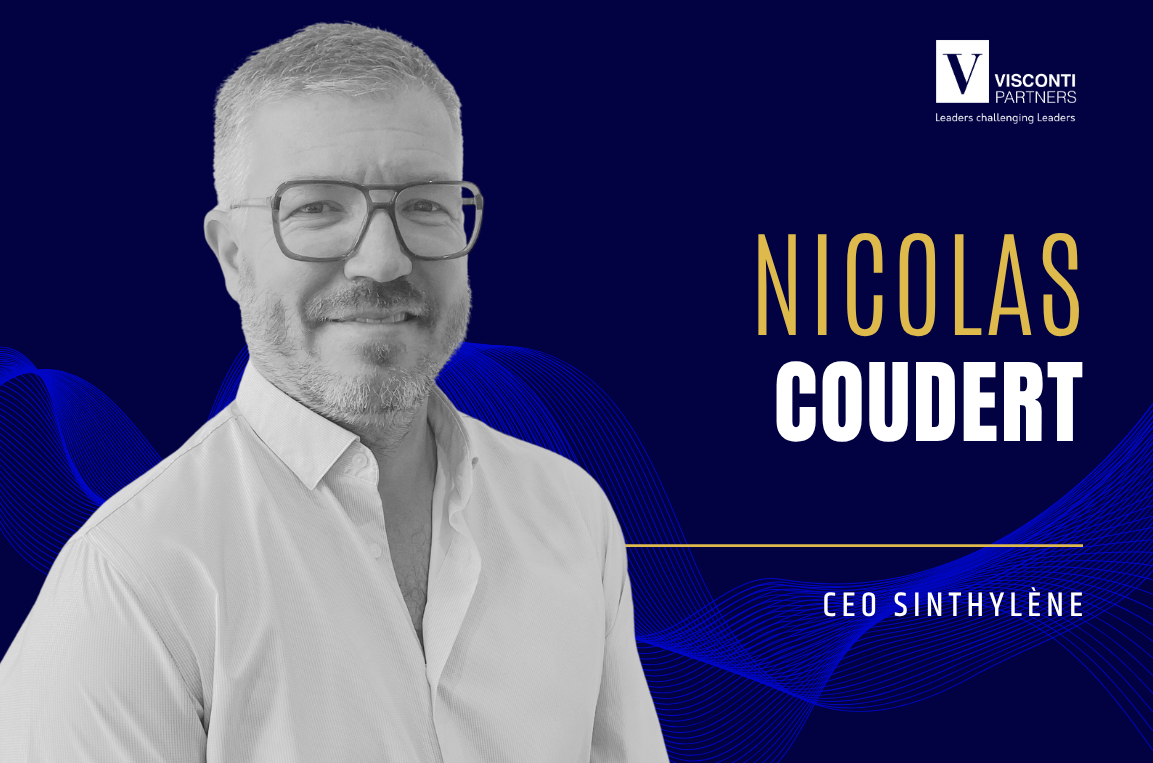
A conversation with Nicolas Coudert, the acquirer of Sinthylène, on industrial business acquisition, the leader's posture and protection against climate hazards.
.png)
.jpg)
In this new VISCONTI talks podcast, Hubert Reynier introduces us to Max Aniort, a sunny personality who loves encounters, stories and people. Both define the contours of this young company, which is not only a luxury villa rental agency...
.png)

Hubert Reynier (VISCONTI Partner), Stéphane Grivat (WNG Group) and Quentin Prévot (Antadis) share their vision of AI, digital and the role of the business leader between Switzerland and France.