Tanguy DELAMARE
“The pessimist complains about the wind, the optimist waits for the wind to turn, the leader adjusts the sails.” John Maxwell


In the book Good to Great, Jim Collins exposes the Stockdale Paradox, named after American admiral Jim Stockdale detained for 8 years and tortured during the Vietnam War.
As he experiences the horror every day, he notices that those who die are always the most optimistic.
We'll go out at Christmas, we'll go out at Easter, we'll go out in summer
These people did not talk about the difficulties, did not say that they were in danger of dying, but remained fundamentally optimistic in the hope that the difficulties would go away. And when they were finally forced to face reality, it had become too difficult and they couldn't deal with it.
Those who have survived, on the contrary, are those who have faced the reality of the facts, the risks involved, the horror of daily life. They kept up the morale of the troops, put in place strategies to resist torture, and kept the determination to get out of it.
What does the Stockdale paradox teach us in the context of the current crisis?
The Stockdale Paradox teaches us that we must not deny reality: put things clearly, describe the situation, face reality, name risks up to the most catastrophic scenario.
Concretely, do not be optimistic when building your scenarios, neither in the evolution of your turnover, nor in the management of your customer invoices, nor in cash flows, nor in the potential duration of this crisis.
Be prepared for the worst.
Visualize and project yourself into this worst-case scenario. Brainstorm with your teams on the means available or to be invented to last as long as it takes. Develop workaround strategies.
Then, and only after surviving the worst-case scenario, work on the more optimistic scenarios.
Finally, work on your rebound, the post-crisis period and how you can come out strengthened.
“The pessimist complains about the wind, the optimist waits for the wind to turn, the leader adjusts the sails.” John Maxwell
“The pessimist complains about the wind, the optimist waits for the wind to turn, the leader adjusts the sails.” John Maxwell
Visconti Partners presents its advice, inspiration, and case studies to help you unlock your potential and that of your business.
View all articles

What keeps a company standing isn't always what you'd expect. A cross-reading of biology and management on executive robustness.
%20(2)%20(2).png)

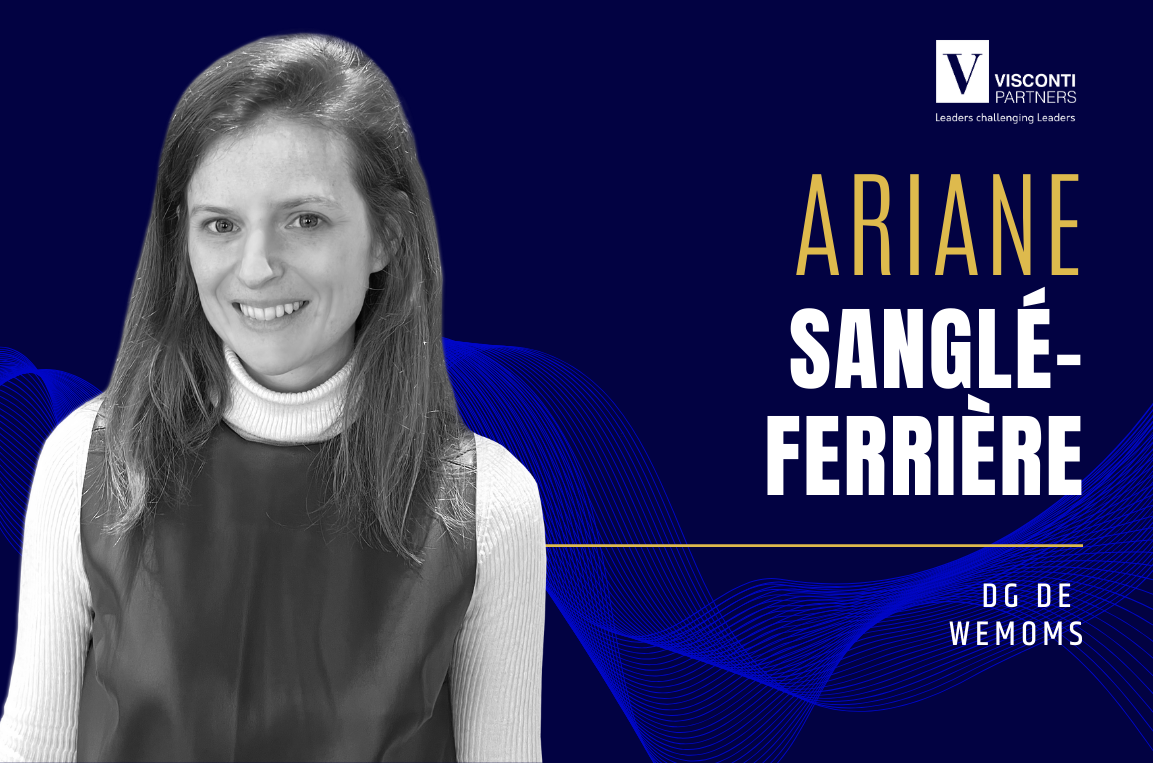
In this new episode of VISCONTI TALKS, Hubert Reynier welcomes Ariane Sanglé-Ferrière, CEO of WeMoms for the past year, after spending four years at Voodoo, a major player in gaming.
.png)
.jpg)
In this new episode of VISCONTI talks, Christine Landrevot, Entrepreneur and Coach Manager, meets Fanny Forgeau, CEO of Yogosha, an innovative company in cyber security. This Sciences Po graduate and Doctor in Political Sociology is driven by the quest for...

In this new issue of VISCONTI TALKS, Hubert REYNIER, coach and founder at VISCONTI Partners, welcomes Thomas PASQUET, the co-founder and Chairman of Ogury, one of the world leaders in mobile advertising. Immerse yourself in the fascinating history of Ogury, from...