
.png)
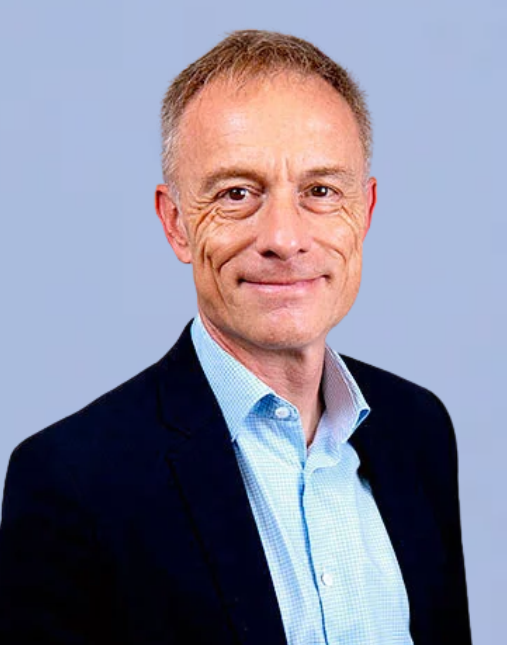
In this episode of Visconti Talks, Pierre welcomes Alexandre Simmler, co-leader of the French family group SBM with nearly 1,000 employees generating 350 million euros in revenue, present in Europe and the United States.
But who is Alexandre Simmler?
Alexandre Simmler co-manages a family business specializing in crop protection for professionals, gardens and homes for the general public, and well-being whose solutions address human and animal health. Alexandre joined the company in 2003, started in the field, then progressively climbed the ranks until taking operational leadership of the group alongside his father, the founder of the company.
A family entrepreneurial adventure
The SBM group is above all a story of transmission. Created by Jean-Paul Simmler, the company has developed through a combination of organic growth and structuring acquisitions.But growing within a family framework raises a key question: how can a company's governance evolve without breaking the initial human and decisional balance?
A major strategic turning point
In 2016, the SBM group reached a pivotal moment in its development. Its model was confronted with several limits: a highly regulated market, heavily dependent on weather, with seasonal activity and profound changes in uses, particularly on consumer products.Faced with these constraints, one question arose: how to continue to develop sustainably in this context?It is within this strategic reflection that a decisive opportunity emerged: the acquisition of Bayer's garden business, in Europe and the United States. A decision taken quickly, with major consequences.In a few months, the group changed in scale:
- the activity went from €25 million to €250 million in revenue
- 150 employees joined the company
- a new organizational and operational system had to be built
This operation marked a true turning point: the SBM group went from a French SME to a structured international player.
When growth imposes transformation
With the group's growing complexity, the limits of internal governance became apparent. Until then, decisions were made within a small circle, with a strong entrepreneurial vision.But this way of operating reached its limits in the face of:
- the multiplication of subsidiaries
- international challenges
- the need to secure the future of the teams
The question then became central: how to continue to remain agile, keep our characteristic DNA… while deciding better?
The transformation of governance
The SBM group then decided to structure its governance with the implementation of a board of directors including independent members.A profound change that allows:
- to break out of the inner circle
- to challenge decisions
- to structure strategic thinking
- to best anticipate the future
This board became a true lever for transformation, while preserving the agility specific to the family business.
An impact beyond strategy
Beyond decisions, this transformation has a strong human impact:
- On the leader, who is more challenged in his convictions
- On the teams, reassured by a structured governance
- On the father-son relationship, appeased and more balanced
Governance thus becomes a tool serving performance.
What lessons for leaders?
Through his experience, Alexandre Simmler shares several strong convictions:
- Governance allows the company to grow
- It provides the necessary perspective to decide better
- It requires accepting to be challenged
- It becomes essential when the company becomes more complex
- It structures strategy and vision in the medium and long term
The role of the leader
For Alexandre Simmler, good governance allows above all: to decide better… and to lead better. It brings precious serenity to make informed decisions, and to place the company on a sustainable trajectory.
The coach's advice
The growth of a family business requires a change in posture. Moving from intuitive functioning to structured governance does not mean losing one's DNA, but on the contrary:
- preserving it
- strengthening it
- making it sustainable
The leader's role evolves: it is no longer just about deciding… but about creating the conditions to decide better.
Discover in this episode a concrete feedback on the transformation of family businesses, governance challenges and the role of the leader in the face of growth.




.png)

.png)
.jpg)
.jpg)