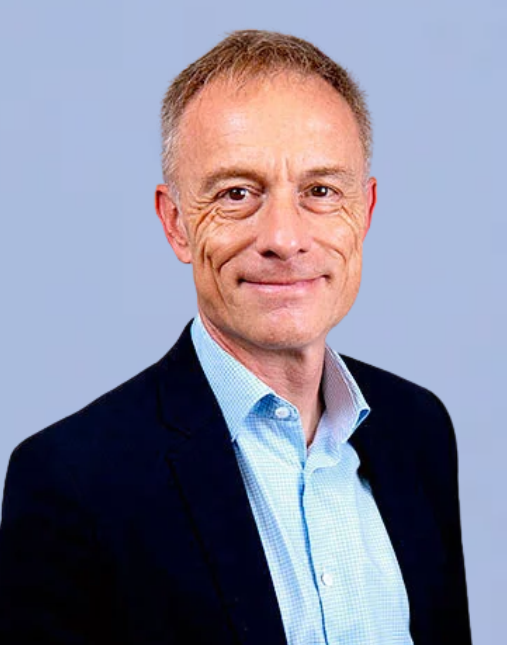
Jean Charles PHILIPPON
“It is not the answer that enlightens, but the question.” — Eugène Ionesco


Which of you, in your private or professional life, asks at least one question a day? The answer is obvious: asking questions is an everyday act… and yet we systematically ask the same types of question, which represent only 15% of the possibilities. Why? Because we look for information that confirms our view of the world, our perception of the situation, our map of the world. Indeed, when someone acts differently, we ask them to justify themselves so that we can understand their behaviour within our own frame. This leads us to limit our questions to 10–15% of what is possible. Today, I would like above all to talk about the other 80% of questions, their richness and the need to use them. I would also like to address the art and science of asking questions.
Socrates understood very early on the need to multiply and diversify questions. He offered questions to his disciples as a gift. For example, instead of asking “Why does so-and-so think like that?”, he would ask: “What assumption are you making to reach that conclusion?” This shifts the other person’s attention to their own way of thinking, inviting them to reflect on their own assumptions and to discover what shapes their map of the world. Socrates’ aim was to make people think in order to educate them.
Today, in 21st-century secondary schools, questions are mainly used to assess pupils, who must reproduce what they have been taught. This type of question aims to check and consolidate our map of the world. But why ask other types of question? Einstein offers an answer: if his life depended on it, he would spend the first 55 minutes finding the right question to ask, and only five minutes answering it. He shows us that questioning matters more than the answer itself. For example, rather than asking why celestial movements were not explained by the theories of the day, he put forward new hypotheses, such as that of a non-constant space-time, thereby changing physics’ map of the world and enabling considerable advances.
Asking questions is essential. The key is to put yourself in the shoes of the person you are asking, whatever the situation. You can invite them to answer as an actor (doing something), as an observer (analysing the situation), or to step back and reflect on their emotions. This draws on different areas of the brain, opening up many possible answers. By varying your questions, you multiply the opportunities for exchange forty-fold.
In your private and professional lives, asking different questions opens up new perspectives and broadens your map of the world. It allows everyone to diversify their approaches and choose the questions that will help them progress. Faced with today’s economic, ecological and demographic challenges, we need leaders capable of asking better questions. That is the aim of questiology.
“It is not the answer that enlightens, but the question.” — Eugène Ionesco
“It is not the answer that enlightens, but the question.” — Eugène Ionesco
Visconti Partners presents its advice, inspiration, and case studies to help you unlock your potential and that of your business.
View all articles

The higher you rise, the faster the answers come. A former mid-market CEO revisits Hal Gregersen’s MIT research on catalytic questions.

.png)
Dear Directors, the secret of your success could well be found here... Hubert Reynier, founding president at VISCONTI partners, and Aurélien Henry, CEO of VELVET, announce big news: the creation of a center of excellence for the Chiefs of Staff

In this new issue of VISCONTI TALKS, Hubert REYNIER, coach and founder at VISCONTI, welcomes Sébastien CAVALIER, President of Pass Culture. The result of a leading partnership between the State, cultural actors, the school environment and local authorities, the pass...
.png)

In this new episode of Visconti Talks, Fabienne Saugier, former manager and coach at VISCONTI, welcomes François-Xavier Oliveau, Operating Partner of the Tomorrow Fund at Initiative & Finance. Author of essays, former business manager, François-Xavier Oliveau joined...


%20(2)%20(2).png)