Choose France: 93 billion for everyone else. And for your SME, who is investing?
While France courts the world's corporate giants at Versailles, the SME leader faces an environment beyond their control: the economic climate, taxation, rising insolvencies. And yet, all else being equal, two companies do not meet the same fate. The difference rarely comes down to the finance bill it comes down to the stance, the clarity and the decisions of the person at the helm.
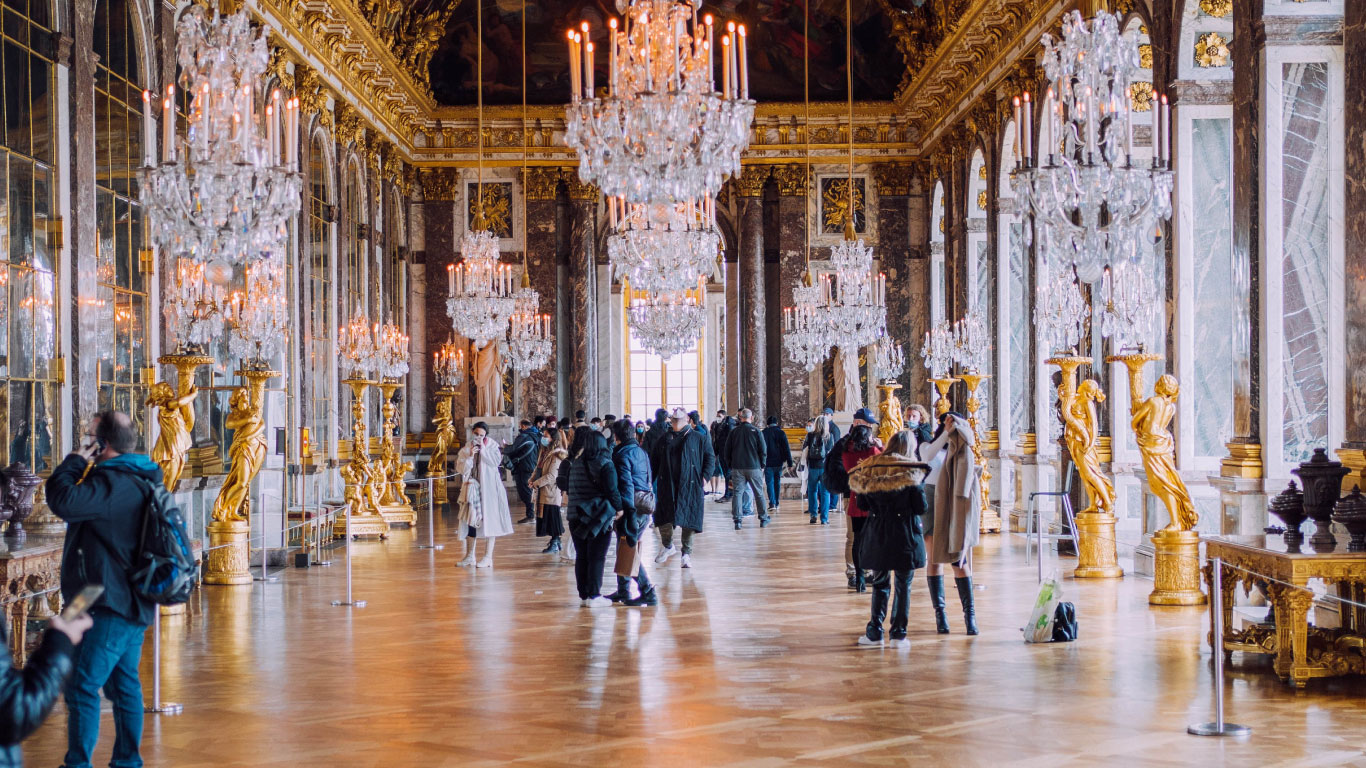
On 1 June 2026, France was celebrating the ninth edition of "Choose France" at Versailles. In his opening address, Emmanuel Macron announced a record figure: 93 billion euros in confirmed foreign investment, for more than 15,000 jobs this edition alone exceeds the combined pledges of the previous eight (franceinfo, 1 June 2026). Good news for the country's appeal, confirmed by the EY barometer, which ranks France, for the seventh year running, as Europe's leading destination for international investment.
But that day, the SME leader was not the subject of the summit. While the red carpet was being rolled out for the multinationals, they were checking their cash position on a Monday morning, in a context they know all too well. Hence a simple question the only one truly within their hands: in an environment you do not control, which lever can you genuinely invest in? The answer comes down to a single word: yourself.
Why is 2026 a pivotal year for SME leaders?
2026 brings together pressures that are rarely combined so simultaneously, raising the bar for SME management to an unprecedented level.
The signals are well documented. France recorded close to 70,000 business insolvencies in 2025, a historic level, and the first quarter of 2026 confirmed the trend with nearly 19,000 insolvencies, up 6.4% according to Altares. The Banque de France's Observatory of Payment Periods further estimates that eliminating late payments would give around 15 billion euros of cash back to SMEs liquidity that currently lies dormant in other people's payment terms. Added to this is a heavy regulatory agenda, with mandatory electronic invoicing coming into force from September 2026.
The essential point is not to mount an indictment of taxation or the economic climate it is neither the leader's role to wear themselves out over it, nor ours to turn it into an op-ed. The essential point lies elsewhere: all these pressures have one thing in common, namely that they escape the leader's control. This is precisely the paradox we already explored in our analysis on economic attractiveness and leadership as a matter of sovereignty: you can anticipate these factors, adapt to them, prepare for them but you do not hold the controls. Recognising this is not an admission of helplessness. It is the condition for redirecting your energy to where it genuinely produces effects.
What is the only variable an SME leader truly controls?
The only variable a leader fully controls is themselves: their strategic clarity, the quality of their decisions, their lucidity about their own blind spots, and their energy at the moment of decisive trade-offs.
This is an observation that is at once demanding and liberating. With identical economic conditions, identical taxation, and a comparable sector and size, two leaders do not produce the same results. One absorbs a shock and bounces back; the other gets bogged down. The difference is not to be found in a piece of legislation, but in the ability of one of them to make swift, sound decisions when everything is uncertain, to hold the course without digging in, and to align their teams around a clear direction.
This is precisely the conviction that drives the episode of the VISCONTI Talks devoted to the new codes of the high-performing leader, whose opening question sums it all up: what if your greatest performance lever were you? The SMEs that come through crises are not only those that benefited from a favourable environment. They are often those whose leader managed to stay lucid and decisive where others let themselves be overwhelmed.
Why do high-performing leaders exhaust themselves on the wrong battles?
Because the most natural reflex, when faced with a wall, is also the most costly: fighting head-on against that over which one has no hold.
The combative leader, deeply attached to their company, spends considerable energy dissecting every reform, anticipating every piece of bad macroeconomic news, putting the world to rights about what "ought to be done". This is human. But meanwhile, their energy is not going where it is decisive: vision, strategic trade-offs, the quality of execution, the alignment of teams. The leader exhausts themselves on the scenery instead of performing their play.
This drift is insidious because it disguises itself as seriousness and responsibility. The underlying work of a lucid leader consists in constantly distinguishing what falls within their circle of influence from what falls within their circle of concern and in investing first and foremost in the former. It is also a matter of stance, as our article on strategic decision-making and breaking away from conformity shows: value is rarely created by reacting to the context, and almost always by deliberately choosing one's own playing field.
The leader's solitude: the invisible risk that erodes decisions
The leader's solitude is an underestimated risk factor that silently erodes the quality of decisions, precisely at the moment when they matter most.
The figures are telling. According to the landmark study by Bpifrance Le Lab, "Vaincre les solitudes du dirigeant" (Overcoming the leader's solitudes), conducted among 2,400 leaders, 45% of SME and mid-cap leaders declare themselves isolated, and nearly three in four do not feel genuinely supported. More striking still: leaders are alone in running their company in more than half of cases, with no right-hand person with whom to test strategic choices. And health follows suit: a more recent barometer by Bpifrance Le Lab for the Fondation MMA estimated that one leader in three was in poor mental health in 2025, a fragility that worsens with the age of the company.
Now, isolation is not merely a personal discomfort: it is an operational risk. A leader who decides alone, without challenge or an outside perspective, is more exposed to biases, to stubbornness and to flight forward. In an SME, where everything is strategic and where the loss of a client or an unpaid invoice can become catastrophic, this lack of perspective is paid for dearly. Solitude narrows the field of vision at the very moment when it should be widened a theme we develop in "The coaching of leaders, a compass in the fog?".
How can you turn your leadership into a competitive advantage?
Turning your leadership into a competitive advantage means methodically working on the dimensions of the leader's role that depend entirely on yourself. Five levers structure this work:
- Clarify your vision and strategy. A clear direction allows the whole organisation to decide faster and better. Ambiguity at the top multiplies into hesitation at every level.
- Improve the quality of your decisions. Slowing down at the right moment, testing your assumptions, identifying your biases: decision-making is a skill that is worked on, not a gift. The episode "Governance of a family business: how to decide better to grow better" illustrates this concretely.
- Preserve your energy and mental health. The leader is their SME's scarce resource. Their lucidity depends directly on their ability to step back and to avoid carrying everything while holding their breath.
- Align and grow your management team. Building a genuine collective for decision-making dilutes solitude and multiplies execution capacity.
- Equip yourself with a demanding outside perspective. Stepping out of your own head is the condition for seeing your blind spots invisible, by definition, from the inside.
These levers have one thing in common: they depend neither on Versailles, nor on the next finance bill, nor on the economic cycle. They depend on you.
Leading alone does not mean you have to decide alone: what does coaching for leaders change?
Coaching for leaders is an individual and confidential form of support that helps a leader step back, clarify their strategic decisions and strengthen their stance as a leader. It is neither operational consulting nor therapy: it is a structured space for reflection, led by a peer who has themselves been at the helm, serving the performance of the leader and their company.
The nuance is essential: being alone at the head of your company does not oblige you to be alone in your own head. Top-level athletes have a coach; yet the SME leader is expected to be the only person, in the entire organisation, with no one to help them grow and see what they cannot see for themselves.
Relying on a sparring partner who knows the solitude of the role and has no interest other than your success is not an admission of weakness. It is what leaders do when they want to play a notch above their constraints of the moment. It is not a luxury reserved for prosperous times: it is precisely in a difficult environment that this support takes on its full value, as our feature "How coaching for leaders became the secret weapon of French entrepreneurs who do not know crisis" shows. The intended effect is not to add one more voice, but to restore the lucidity and decision-making capacity that isolation and pressure had eroded.
FAQ — Leading an SME in times of uncertainty
Why does the leader's leadership matter so much in times of uncertainty? Because the economic climate, taxation and the market escape the leader's control, whereas their vision, their decisions and their stance belong entirely to them. All else being equal, it is this internal variable that most often explains the performance gap between two comparable SMEs.
What are the main sources of fragility for SMEs in 2026? The rise in insolvencies (nearly 19,000 in the first quarter of 2026 according to Altares), the strain on cash flow linked to late payments, regulatory and fiscal pressure, and an often-overlooked factor: the leader's isolation, which erodes the quality of decisions at the worst possible moment.
Is the leader's solitude a real problem? Yes. According to Bpifrance Le Lab, 45% of SME and mid-cap leaders feel isolated and one in three was in poor mental health in 2025. Beyond the discomfort, isolation is an operational risk: it deprives the leader of the challenge and the perspective needed for sound decisions.
What does coaching for leaders involve, in concrete terms? It is an individual and confidential form of support, led by an experienced peer, that helps the leader clarify their strategy, improve their decisions and strengthen their leadership. It is neither operational consulting nor therapy, but a space for reflection serving performance.
When should an SME leader consider seeking support? Ideally before a crisis, not only during one: during a phase of growth, a transformation, a weighty decision, or simply when the feeling of carrying everything alone becomes an obstacle to lucidity.
Versailles rolled out its red carpet for others. So be it, and that is not the debate. The question that truly matters has never been "who is going to choose me?". The only one within your hands is: what will you, yourself, choose to do with the only variable you control?
At VISCONTI Partners, we support the leaders of SMEs, scale-ups and start-ups in making their leadership their primary competitive advantage. Because in an environment one does not control, everything begins with the person who decides. Speak with a coach.
Sources
- Choose France Summit 2026, €93bn announced — franceinfo, 1 June 2026
- Business insolvencies, Q1 2026 — Altares, business insolvency statistics in France
- Leader's solitude (45%) — Bpifrance Le Lab, "Vaincre les solitudes du dirigeant"
- Mental health (one leader in three) — Bpifrance Le Lab / Fondation MMA, 2025
- Late payments and SME cash flow — Observatory of Payment Periods, Banque de France
- France's attractiveness — EY Attractiveness Barometer (7th year of European leadership)






.png)

